“This is the disease. You believe that you are your mind. This is the delusion. The instrument has taken you over.” – Eckhart Tolle
“She needs your presence! Thats pretty much it in its deepest form.” – Chris Bale
Theory
1. The basics
It may seem paradoxical, but a fundamental pillar of inner game is to get out of your own head. The best way to do this is through embodiment.
Embodiment is the act of focussing attention on the body. This is an attractive male quality because of the mindset and behaviors that spring from it. A man who is embodied is not over-analyzing situations and second guessing himself. His thoughts aren’t moving a million miles a minute—he is still and decisive.
The opposite of embodiment is overthinking. It’s what humans are hardwired to do, and unfortunately it’s the number one seduction killer for men. If a man approaches a woman and overthinks, hey may seem creepy or insecure. If he manages to get a woman on a date and overthinks, he risks undermining any mutual attraction. If, God willing, this same man gets a woman into bed and overthinks, he won’t be able to perform. Ultimately, overthinking = impotence.
| Excerpt from What Women Truly Want & Require From Men by Chris Bale Woman fundamentally wants 1 main cornerstone principle from man (whether she even realises it or not): his full, steady, fierce, loving presence. Everything else you attempt to do or be, when it is detached from your presence, is worthless, because you have not brought yourself with it. Without your presence, you are not even there. Meaning a whole load of other shit fills the space. Male presence initiates so much aliveness in her being. It feeds her. It sparks her. It supports her safety, turn-on, dancing, and melting – simultaneously. |
Of course, an embodied man hasn’t switched off his brain—he’s just not spinning his own wheels.
If he’s trying to complete a task, he’s thinking about the task. If he’s speaking to an attractive female, he is conversing just as he would with anyone else. An embodied man acts effortlessly because he has unplugged from his own overactive mind. It’s not that he has achieved Zen—it’s simply that he’s not expending most of his brainpower on futile, self-sabotaging thoughts.
As author Joseph Nguyen writes in “Don’t Believe Everything You Think“, “it is not WHAT we are thinking about that is causing us suffering, but THAT we are thinking.”
And yet, we still think (and therefore suffer) through most of our waking hours. As novelist Jonathan Safran Foer said, “I think and think and think, I’ve thought myself out of happiness one million times, but never once into it.”
Perhaps that’s because the solution isn’t to be found in thinking at all, but rather by redirecting attention to the body.
2. Digging deeper: Preserving energy
Imagine that a female is approached by two identical looking men. The first man is directing his attention to his posture and this breathing, whereas the second is analyzing the encounter and the probability that it will go his way.
| Excerpt from What Every BODY is Saying by Joe Navarro Nonverbal behaviors comprise approximately 60 to 65 percent of all interpersonal communication and, during lovemaking, can constitute 100 percent of communication between partners. Nonverbal communication can also reveal a person’s true thoughts, feelings, and intentions. For this reason, nonverbal behaviors are sometimes referred to as tells (they tell us about the person’s true state of mind). Because people are not always aware they are communicating nonverbally, body language is often more honest than an individual’s verbal pronouncements, which are consciously crafted to accomplish the speaker’s objectives. |
Now imagine we could press CTRL+F and see a Task Manager for each man’s brain—an inventory of where he’s allocating his brainpower.
The first would have just a few programs open, including “Breathing” and “Posture”. The whole machine (his brain and body) would be running smoothly and there’d be no lag time between thoughts and actions.
The second guy, on the other hand, would have an endless list of programs open, including “Oh god, does she like me??” His machine would be at 100% disk usage.
Thinking is expensive. It’s been shown that simply switching from one task to another uses up precious glucose that the brain needs in order to focus. “There is a psychological switching of gears that can require up to 45 minutes to resume a major task that has been interrupted,” writes Tim Ferris in The 4-Hour Work Week. Ferris goes on to cite a study showing that 28% of each 9-5 workday is consumed by such gear switching.
In another study, participants who planned a diet long before they started were less likely to stick with it because they had already expended the willpower needed to eat clean and hit the gym (see Maximum Willpower by Kelly McGonigal). They imagined themselves on the diet for so long that it actually burned through limited brain energy—a plausible explanation for why so many people give up on their New Year’s resolutions.
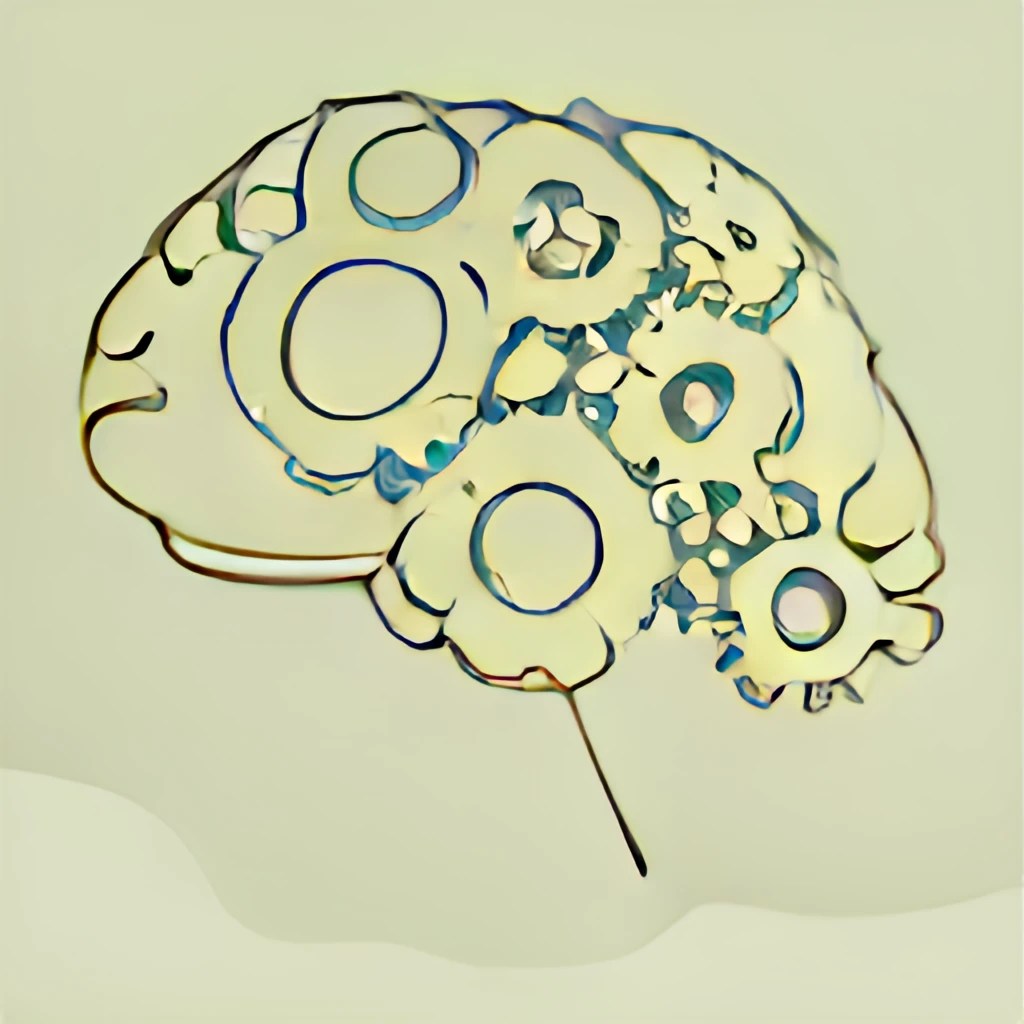
If thinking spends energy, overthinking wastes it. The embodied man preserves limited brainpower so he can remain present and alert.
Further reading: Don’t Believe Everything You Think by Joseph Nguyen
3. Less anxiety = more attraction
Humans in general overthink. But overthinking, for good biological reasons, is mainly a feminine trait. Females are the more vulnerable sex, and so it paid, for hundreds of thousands of years of evolution, to be especially cautious. It made sense for females to overthink and be anxious just as it makes sense for any vulnerable creature to overthink and be anxious.
Put a cat in a room with a mouse, and the mouse gets jittery and distressed. Put a dog in a room with a cat, and now it’s the cat who’s on edge. Anxiety is, in the most general sense, an organism’s way of preparing to meet a threat.
If anxiety is predominantly feminine, it stands to reason that men should display less of it. Whereas anxiety projects vulnerability, calmness and composure project what Henry Kissinger famously called “the ultimate aphrodisiac”: power.
You can see this play out in the wild. When you watch a nature program, there’s a noticeable difference in demeanor between the lion and its prey. The lion, an apex predator and by definition the most powerful species in its environment, spends most of its day calmly gazing into the horizon. The antelope, zebra, wildebeest, etc. is twitchy and fearful, and constantly scanning for threats. Most men have no real threats in their life, so they needn’t ever behave like the antelope. And yet they do, and it’s unattractive.
Too many men try to rectify this by puffing up their chest and acting like an “alpha male”. They mask their inner antelope with an outer chimp. Men who do this are actually signalling that they care too much about what others think of them, and they come off looking desperate and, crucially, anxious. They’ve traded one anxious behavior for another: nervousness / avoidance for faux strength / posturing.
Actual alpha chimps in the wild are constantly anxious of being usurped. On top of that, they don’t always fit the “alpha” profile trumpeted by those who use the term online. The alpha in a tribe of chimps often behave in “beta” ways to maintain their top rank (such as grooming female chimps…what a simp!).
The “alpha”, therefore, is a poor model to follow. Men should remove themselves from anxious thoughts of rank and status entirely and instead be calm and relaxed.
Further reading: Meditations on the Wisdom of Action by Kyle Eschenroeder
Practice
There is no secret to practicing embodiment. Simply redirect your attention to your body. When your attention rests in the body, you’re less prone to flit from one thought to another—the mind is still.
What I’ve found works best is to focus on just one part of the body, ideally the extremities.
1. Focus on just one part of the body…
It’s difficult to direct your attention to your whole body since you never really feel from your whole body—you feel from its parts. If you try it right now, you’ll probably find that your attention can’t wrap itself around your entire frame and will move from one part of the body to the next. This is why it’s best to select a part of your body and focus exclusively on it.
If you direct your attention to your stomach, for example, you’ll begin to notice sensations that you were oblivious to only moments prior, like the way your belly feels as you inhale. It’s proof of your limited attention: you’ve been breathing the whole time, but only when you put the spotlight of your attention on your breathing do you consciously notice it.
“There is more wisdom in your body than in your deepest philosophy.“
Friedrich Nietzsche
By directing your attention to your body, you take yourself out of your mind. Attention is zero-sum, meaning any single thing on which you focus your attention is at the expense of something else. Sometimes it feels like two completely different thoughts are occupying your mind at the same time, when in reality you’re probably shifting rapidly between the two.
2. …ideally the extremities
When selecting a part of the body on which to focus your attention, opt for the extremities (your hands and feet).
There’s two reasons for this. The first is that the extremities are easier to feel. They’re more sensitive, they’re used more than other body parts, and they’re often in contact with surfaces, which heightens sensation. Your feet are almost always planted on the ground, for example, so you can feel them more than, say, your knees. The easier it is to feel a body part and keep your attention on it, the more successful you will be when you practice embodiment.
The second reason to focus your attention on your extremities is because this is where confident body language is expressed. When you focus your attention on your hands, you’ll use them more freely in speech. When you focus your attention on your feet, you’ll be more mindful of your posture. If you’re doing everything right (that is, you really are focussed on your hands or feet and you aren’t in your head), then you’ll inevitably project confidence to the world. You will appear more grounded then your fellow over-thinkers, who haven’t come across this sort of advice before.
Further reading: Anything on the Awakened Intent Blog by Chris Bale
 Inner Game Seduction
One response to “III: Embodiment”
[…] as a game) builds self-confidence and real-world problem-solving skills. One is more flexible and less in their head when they’re in a state of […]
LikeLike