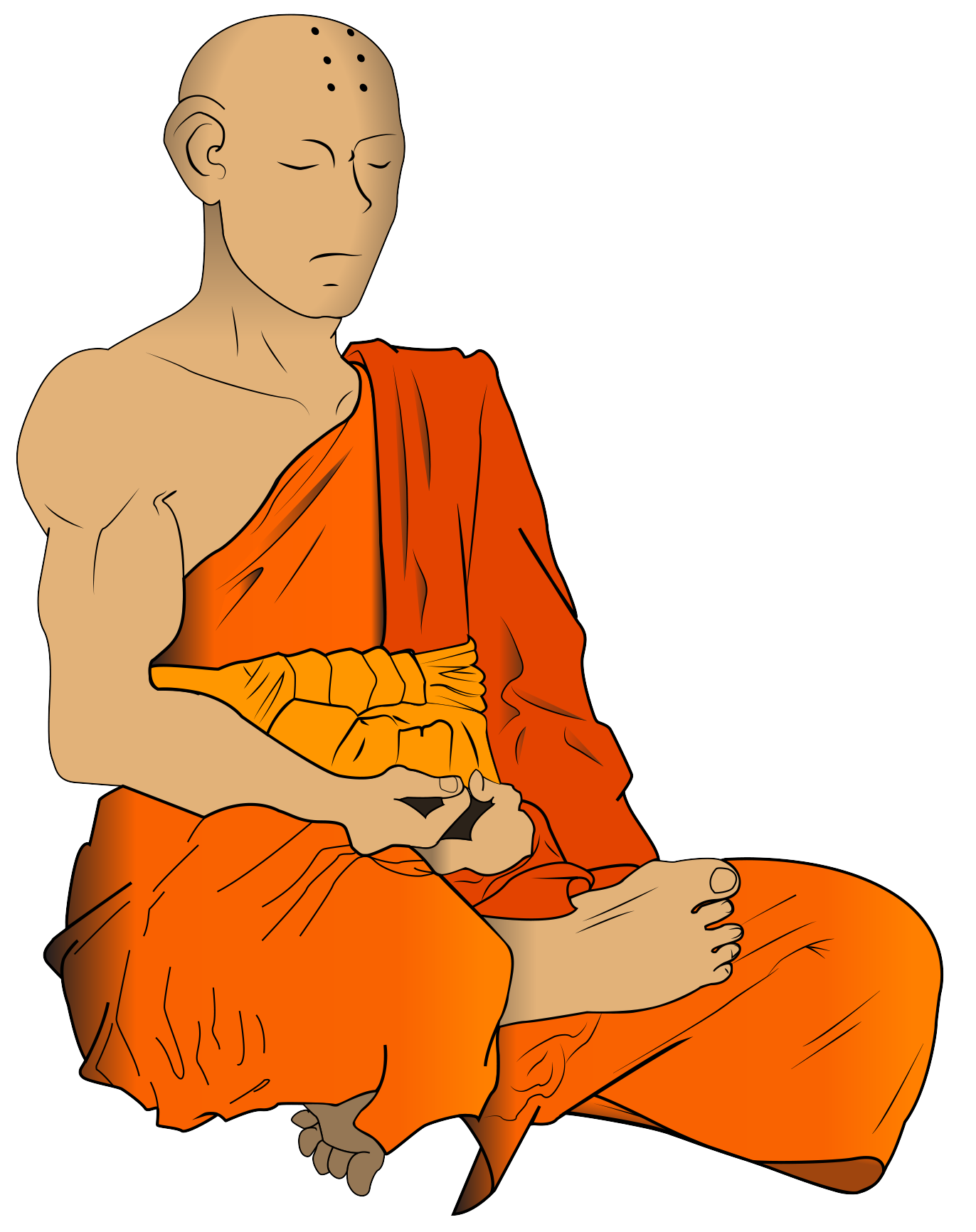
“Be like water making its way through cracks….Adjust to the object, and you shall find a way around or through it. If nothing within you stays rigid, outward things will disclose themselves.” – Bruce Lee
“A tree that won’t bend
Easily breaks in storms.”
– Laozi

Theory
1. The basics
Life is inherently unpredictable. Interpersonal setbacks like divorce, job loss, or the untimely death of a loved one catch even the most circumspect planners off guard. Even if one manages to live off the grid, illness and injury eventually come knocking. Then there are macro events like hurricanes, pandemics, market crashes, and wars. No matter how much one tries to impose order on this life, no matter how much one insulates oneself from “outrageous fortune”, life eventually has other plans.
In the midst of adversity, resilience counts the most. But when adversity first strikes, catching one unawares, something else is called for. I call this trait flexibility. The man who is flexible has a wider range of options to meet life’s challenges. He may opt to confront an obstacle head on or walk around it. He may grit his teeth and push past resistance or soften and allow the moment to pass. The point is that he is more likely to reach a solution.
| Excerpt from Tough: Building True Mental, Physical & Emotional Toughness for Success & Fulfillment by Greg Everett Possessing an extensive and growing array of skills and knowledge, well-developed physical qualities across myriad realms, and the ability to take care of ourselves in as broad a range of situations possible—and knowing we do through experience—is the single greatest contributor to confidence imaginable. The confidence that capability provides us extends past the borders of our actual experience to some degree as well. Through collected experiences of both obvious success and mere survival, in addition to the skills and knowledge we inevitably accrue, we gain increasing trust in our general ability to make it through any conceivable situation because our mindset is shaped by that history. As a result, we naturally enter into unfamiliar circumstances and face new challenges with self-assurance and the attendant commitment to doing what’s demanded of us decisively. Uncertainty and vacillation in an emergency, in response to a threat, or simply in any situation in which failure carries with it meaningful risk, is the perfect formula for undesirable consequences. |
Flexibility is an attractive male quality because it signals the ability to adapt. As Charles Darwin wrote in his celebrated On the Origin of Species:
In the struggle for survival, the fittest win out at the expense of their rivals because they succeed in adapting themselves best to their environment.
Over the years, this passage has been bastardized into the following misquotation:
It is not the strongest of the species that survives, nor the most intelligent. It is the one that is most adaptable to change.
While this version isn’t properly Darwin’s, it better illustrates my point: fitness isn’t about strength or intelligence, it’s about adaptability.
Qualities like strength and intelligence are important, but only a means to adaptation. You should always adapt through whatever means necessary.
2. Digging deeper: Problem solving
Life on this earth, whether it takes the form of a flower, insect, bird, bacteria, redwood tree, duck-billed platypus, or this wondrous arrangement of cells we call the human, is confronted daily with stressors. A deer will rise from its broken slumber hungry, and spend its day not only searching for anything that will satisfy this craving, but also avoiding every possible threat to its survival. From the outside, it’s beset by wolves, who seek to eat it, humans, who seek to shoot it, and adverse weather, which doesn’t give a damn whether it lives or not. From the inside, it must contend with hunger, thirst, and sometimes disease.

The more problems an organism faces, the more tools are required to solve them. Hard coded in the deer’s brain are mental programs that tell it to run, duck, bend over to take a drink, stand tall to scan for threats, and countless other responses that keep it alive. These mental switches, just like the fur on its back and the teeth in its mouth, are, broadly speaking, tools.
We humans have an endless array of tools at our disposal, thanks in no small part to our highly developed brains. We even have tools that create tools, such as a 3D printer that manufactures screwdrivers. Since the range of available tools is near infinite, our species, more than any other, can exercise a large degree of creativity in its response to problems. We’re like walking Swiss Army Knives.
“We cannot solve our problems with the same thinking we used when we created them.”
Albert Einstein
Imagine if a man responded to all his problems by throwing a punch. He might fare well against a smaller human adversary, but he’d fare poorly against a wasp nest. If the ability to flee were added to his repertoire, his survival value skyrockets. In other words, survival value is directly correlated to the range of tools one has to solve problems.
Having more tools to solve problems, coupled with the ability to select the right one at any given moment, is what it means to be flexible.
3. Fixing things is sexy
In one of the opening scenes of the 2016 film Manchester By The Sea, Casey Affleck’s character Lee, the local handyman, overhears one of his female clients on the phone:
But Cindy, I have to tell you something. I’m like, in love with my handyman. Is that sick? …Have you ever had a sexual fantasy about your handyman? … Well, it’s awkward because he is literally like, cleaning the shit out of my toilet bowl right now. And I don’t think I’m at my most alluring …
Most women think it’s attractive when a man knows how to fix things around the house. Mechanics, plumbers, and electricians are depicted in pop culture as rough, rugged, and masculine, and their female clients can’t help but ogle them. Is this simply because these professions self select for these types of men? Or is there something inherently attractive about the work that they do?
The truth is, fixing things is sexy. The man who can fix things simply has more problem solving ability than the man who can’t.
Imagine the first time a man solved a problem in the presence of his peers. Perhaps a tribe of early humans were trapped in a cave, and one of them moved the boulder blocking the exit by rolling it onto a wedge fashioned from scrap wood. This man would have seemed like a god to his peers, and the women would have undoubtedly lusted after him.
Luckily, you don’t need to move boulders to be flexible and signal high survival value. You don’t even need to fix cars or really anything physical (although women do really like this). You just need to be able to solve problems.
In today’s age, when food is abundant and threats are scarce (in other words, survival is virtually guaranteed), nearly all the problems you’ll confront in life are mental.
4. Invisible walls
Women desire a man who can push past resistance, whatever form that takes. Just as the broken car and boulder in front of the cave door are resistance, so too is being laid off or feeling depressed. A man’s natural direction is forward, and life is full of invisible walls that block his progress. Breaking through those walls is part of the essence of being a man.
| Resistance (An excerpt from The War of Art by Steven Pressfield) Most of us have two lives. The life we live, and the unlived life within us. Between the two stands Resistance…. Resistance is the most toxic force on the planet. It is the root of more unhappiness than poverty, disease, and erectile dysfunction. To yield to Resistance deforms our spirit. It stunts us and makes us less than we are and were born to be…. Look in your own heart. Unless I’m crazy, right now a still, small voice is piping up , telling you as it has ten thousand times before, the calling that is yours and yours alone. You know it. No one has to tell you. And unless I’m crazy, you’re no closer to taking action on it than you were yesterday or will be tomorrow. You think Resistance isn’t real? Resistance will bury you. |
I once had a conversation with a former girlfriend about what makes a man attractive. Without hesitation she said “it’s knowing how to handle shit.” As she elaborated, two things became clear to me.
The first was that problems are a necessary ingredient to this equation. A man must have some friction, either in his past or present, to demonstrate an ability to move beyond obstacles. Otherwise he’s not growing as a man, and stagnancy is unattractive. As Athol Kay writes in The Mindful Attraction Plan, “You’re better off being at rock bottom and heading up, than somewhere okay and heading down.”
The second thing that became clear to me was that my ex’s words “handle the shit that he’s dealt” didn’t just mean grit, resilience, and dogged determination—it meant whatever it takes to get to to the finish line. If you’ve been laid off at work, what’s important is that you move forward, whether that means grappling with your depression or making intelligent use of your professional network. It doesn’t matter how you solve your problems, it matters that you solve your problems.
Understanding this should ease some of the burden men feel they have to be perfect and unmoved. Obviously mental resilience should be cultivated and is an immensely attractive quality, but it’s just one tool in the toolbox. What’s attractive is success, whether that means attaining status and riches or simply fixing a leaky pipe. If it were all about mental resilience, then women wouldn’t be throwing themselves at drug-addicted musicians. What’s ultimately attractive is forward movement.
Further reading: Tough: Building True Mental, Physical & Emotional Toughness for Success & Fulfillment by Greg Everett
Practice
1. Everything’s a puzzle

In order to train the flexibility muscle, you should approach every problem as a puzzle.
Men love solving puzzles. Even something as banal as getting the TV to work will dilate our pupils and put us in an intensely focussed frame of mind. Completing a task, any task, gives men a rush.
Perhaps it’s flow state, or dopamine, or a by-product of the cultural expectation for men to perform. Or maybe it’s something deeper: a masculine “search for freedom” that David Deida claims underpins everything from chess to warfare. The cause doesn’t really matter. What matters is that puzzle-solving mode feels good—it gives men a spark.
So how do you approach every situation as a puzzle to be solved? Simple: always scan for solutions. Start to see everything you do as one choice among many, and then make a game out of selecting the right one.
If you actually practice this daily you’ll start to see two changes occur. First, you’ll get that “spark” I mentioned earlier: you’ll be in puzzle-solving mode, which will put you in a more heightened state and propel you forward. Then, after enough practice, an even more beautiful transformation occurs: you become less risk-averse. This then leads to more action and more risk taking in a positive feedback loop.
2. Gamify real life
When you play a video game you play as someone else—you’re more outcome independent because there are no consequences for failing.
There’s a growing body of research showing that people who play a few hours of video games a week are less risk averse than those who don’t. The most likely reason is that people who play video games are more inured to failure.
| Excerpt from The Super Mario Effect: tricking your brain into learning more, a TED talk by Mark Rober This concept of life gamification is more than just, like, “Have a positive attitude” or “Never give up” because those sort of imply you’re having to endure against your true desire to quit. I feel like when you frame a challenge or a learning process in the way I’m describing, you actually want to do it. It feels natural to ignore the failures and try again, in the same way a toddler will want to get up and try and walk again or in the same way you want to keep playing Super Mario Bros….This is what I call the Super Mario Effect: focusing on the princess and not the pits to stick with a task and to learn more. There’s some universal principle at play here. By shifting your focus to the princess and treating your life’s challenges like video games, you can trick your brain and actually learn more and see more success. |
Game designer and researcher Jane McGonigal argues that “purposeful play” (in other words, treating life as a game) builds self-confidence and real-world problem-solving skills. One is more flexible and less in their head when they’re in a state of play.
Flexibility can therefore honed from the simple practice of gamifying real life. See each problem as a puzzle, and then attack it the same way you would if you had infinite lives.
Further reading: SuperBetter: The Power of Living Gamefully by Jane McGonigal
 Inner Game Seduction